Paleobiology & Biomechanics • Middle Eocene Cetaceans
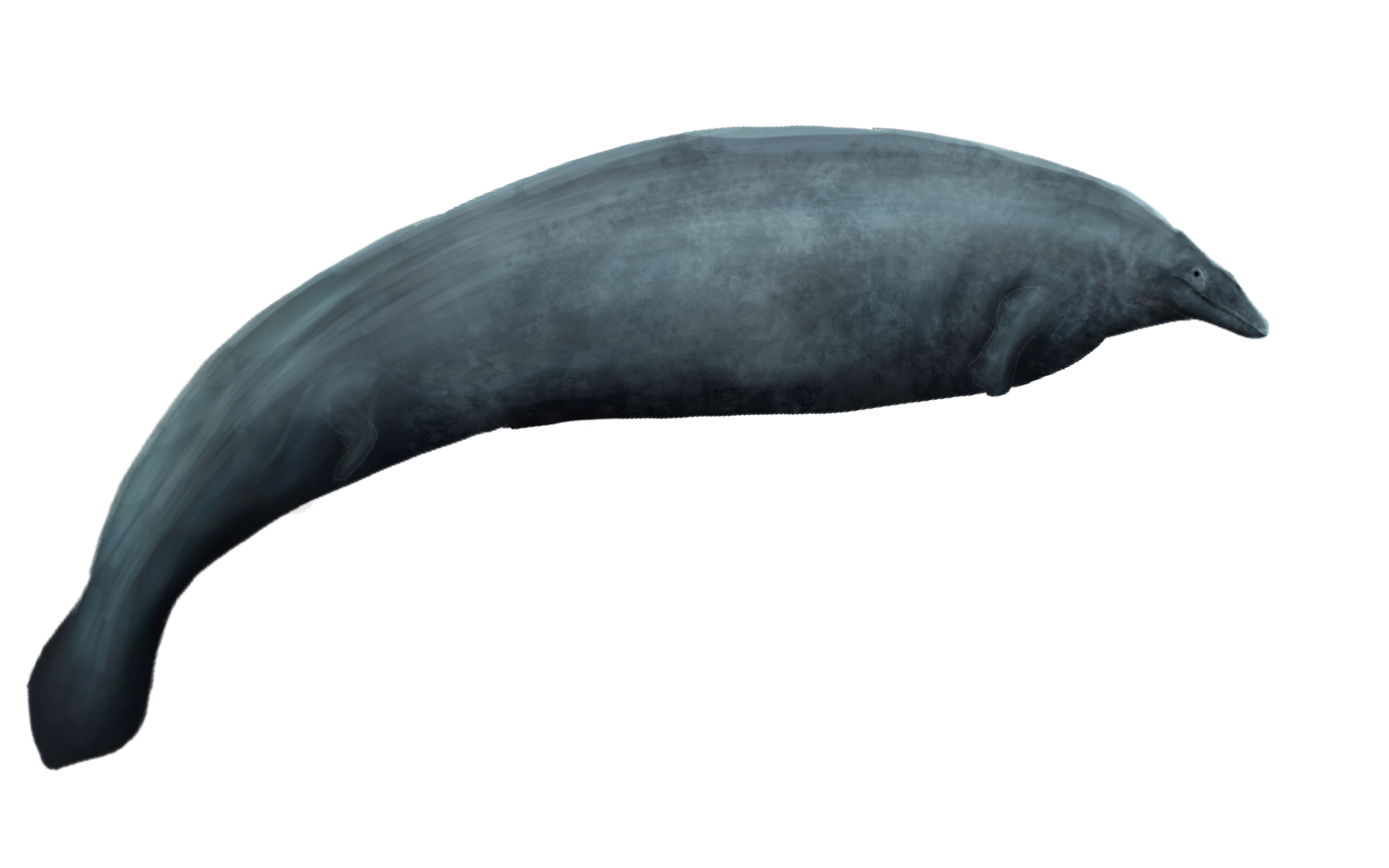
Prehistoric Giant Whale Discovered in Peru (Perucetus colossus)
Fossilized vertebrae, ribs, and pelvic fragments recovered from the Eocene coast of Peru revealed an aquatic mammal with solid, hyper-dense bones weighing 5.3–7.6 metric tons—acting as shallow-water ballast while igniting a fierce scientific debate over its true body mass.
CH
Cameron Hoppe
Published August 4, 2023 • Post #24
Research Briefing Dispatch
YouTube • 16:9
Produced by Cameron Hoppe • Giant Prehistoric Whale Discovered in Peru - Perucetus Colossus
Watch Directly on YouTube
↗
August 4, 2023 • Authentic Companion Deck
Show Notes — Giant Prehistoric Whale Discovered in Peru
SLIDE 1 OF 6
Discovery
Archimedes Buoyancy & Mass Scaling
Perucetus Colossus Pachyostosis, Buoyancy & Mass Explorer
Test how a 5.3–7.6 ton hyper-dense skeleton counteracts blubber buoyancy in shallow coastal waters, and compare Bianucci et al. (2023) vs. Motani & Pyenson (2024) mass models.
Neutral Coastal Trim • 140 t
$$F_{\text{net}} = g\big(\rho_{\text{sw}} V_{\text{body}} - m_{\text{skel}} - m_{\text{soft}}\big), \qquad m_{\text{skel}} \in [5.3,\; 7.6]\text{ t}$$
Pachyosteosclerosis
Solid Ballast Skeleton
Cortical bone thickening (pachyostosis) + marrow infill (osteosclerosis) raises skeletal mass to 5.3–7.6 tons—over 2× a blue whale’s skeleton.
85–340 t (2023)
Bianucci et al. (2023) Range
Initial Nature estimate assuming extreme soft-tissue scaling from Cynthiacetus-like proportions up to 340 metric tons.
60–70 t (2024)
Motani & Pyenson Revision
2024 re-analysis arguing unusually dense bones disproportionately inflated linear scaling regressions, revising body mass to ~60–70 metric tons.
6.5 t
2.5 t (Spongy Cetacean)
5.3–7.6 t Perucetus
8.0 t Max Ballast
140 t
65 t (Motani 2024)
180 t (Nature Mid)
340 t (Upper Bound)
Total Body Mass
140 t
Skeletal Fraction
4.64%
Net Trim Regime
Balanced Ballast
Estimated Environment
Shallow Coastal Zone
References & Canonical Citations
- [1] Primary Discovery Paper: Bianucci, G., Amson, E., Urbina, M., et al. (2023). A heavyweight early whale pushes the boundaries of vertebrate gigantism. Nature. Nature Article ↗
- [2] Body-Mass Reassessment: Motani, R., & Pyenson, N. D. (2024). Revised biomechanical body-mass estimate placing Perucetus colossus near ~60–70 metric tons rather than 85–340 metric tons. PLOS ONE (2024)
- [3] Comparative Basilosaurid Template: Cynthiacetus peruvianus osteology & late Eocene Peruvian stratigraphy. ScienceDirect ↗
- [4] Companion Presentation: Hoppe, C. (August 4, 2023). Giant Prehistoric Whale Discovered in Peru (Archival Show Notes PDF). Open Show Notes PDF ↗
Direct to Inbox
Cadence & Curation
Published 1–2 times per month. Dedicated essays and research notes curated directly by Cameron Hoppe.
The Monthly Dispatch: Signal Over Noise.
No daily email spam. One to two digests per month exploring scientific paradoxes, astrophysics, and discoveries.