Do Human Voices Frighten Wildlife More Than the Sounds of Other Predators?
Controlled camera-trap speaker trials across Greater Kruger National Park revealed that 95% of savanna mammals flee calm human conversation roughly twice as often—and abandon waterholes 40% faster—than they do lion roars, barking dogs, or gunshots.
Cameron Hoppe
Published October 6, 2023 • Post #31
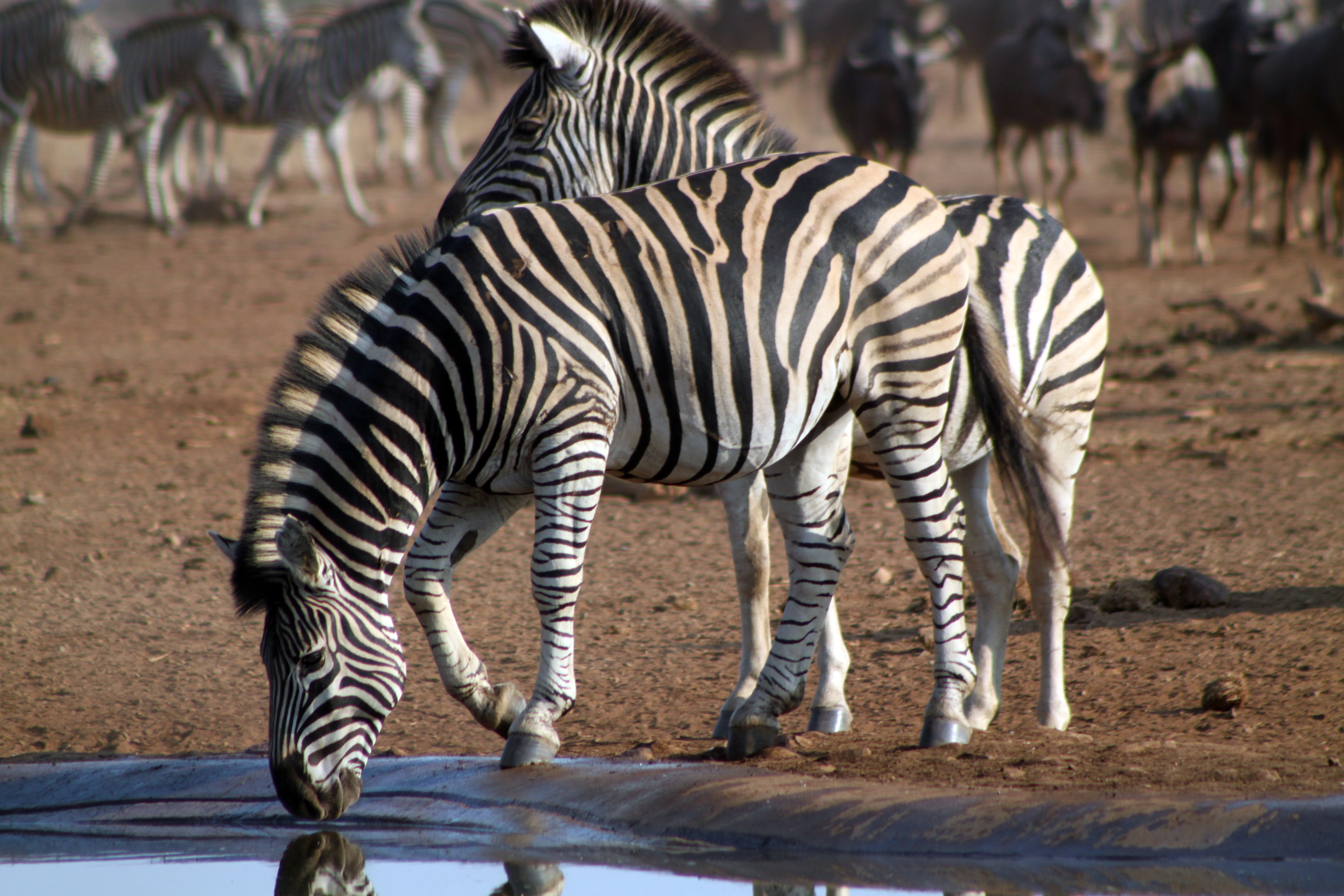
Researchers with Western University in London, Ontario published a study that evaluated the effects of human voices on wildlife in Greater Krueger National Park in South Africa. The study is linked below.
Zanette, L. Y., Gordon, E., Cornhill, K. L., Scrafford, M. A., Packer, C., & Clinchy, M. (2023). Fear of the human ‘super predator’ pervades the South African savanna.
Even inside a premier protected reserve teeming with lions, hidden Automated Behavioral Response (ABR) camera-trap speakers broadcasting calm human speech in local languages triggered far stronger flight responses than lions snarling, dogs barking, or gunshots—affecting 95% of observed species from giraffes and elephants to leopards and hyenas.
Kruger Waterhole “Super Predator” Acoustics Lab
Trigger Automated Behavioral Response (ABR) camera-trap playbacks beside a Kruger dry-season waterhole and compare how human conversation clears wildlife faster than lions or hunting cues.
- [1] Primary Greater Kruger Savanna Study: Zanette, L. Y., Gordon, E., Cornhill, K. L., Scrafford, M. A., Packer, C., & Clinchy, M. (2023). Fear of the human ‘super predator’ pervades the South African savanna. Current Biology, 33(21), 4689–4696. Current Biology Paper ↗
- [2] Companion Dispatch: Hoppe, C. (October 6, 2023). Do the Sounds of People Frighten Wildlife? — YouTube Short & Research Notes. Watch YouTube Short ↗
The Monthly Dispatch: Signal Over Noise.
No daily email spam. One to two digests per month exploring scientific paradoxes, astrophysics, and discoveries.